Create a useful handoff from an AI session
A handoff should let another person continue without reconstructing the conversation. It needs the state of the work, not a flattering account of the discussion. Capture what was decided, what was actually checked and what remains uncertain, then verify that the summary preserves those distinctions.
Name the destination and the next decision
Before requesting a summary, identify who will use it. A teammate implementing a change needs constraints and acceptance criteria. Your future self may need the unresolved question and where the supporting material lives. A manager may need a decision request rather than a transcript.
Ask: “Create a handoff for someone continuing this task tomorrow. They have not heard the conversation. Include the goal, current state, decisions, verified evidence, unresolved questions and next proposed action. Mark missing information instead of completing it from inference.” The audience keeps the result focused.
Separate five kinds of information
A decision is a choice someone made. A fact is a statement supported by evidence. A test result describes what was run and observed. A hypothesis is a plausible explanation. A next action is a step someone still needs to take. Mixing these categories is the most common way a handoff becomes misleading.
For example, “We think Bluetooth caused the failure” is not equivalent to “The Bluetooth route failed a repeatable test.” Preserve conditions such as device, app version and whether the issue occurred on a fresh session. If they were never discussed, leave them explicitly unknown.
Use an original handoff example
Suppose a session concerned a missing audio reply. A useful record is: “Goal: hear the assistant’s answer. Observed: text replies arrive on the iPad. Not checked: whether spoken replies are enabled. Next: enable the speech option, select the speaker route and repeat one short text prompt.” That record gives the next person a safe first step.
A poor summary would say “Audio fixed; restart the app.” It claims a result without evidence and throws away the working text path. If your summary resembles that, ask for a second pass that labels observations and removes unsupported completion language.
Inspect the fragile details manually
Check names, file locations, dates, requested output and exclusions. A handoff can be grammatically excellent while changing “do not publish” into “publish after checking.” Read every sentence involving permission or completion particularly carefully. Include only the context the recipient needs and remove credentials or private customer data.
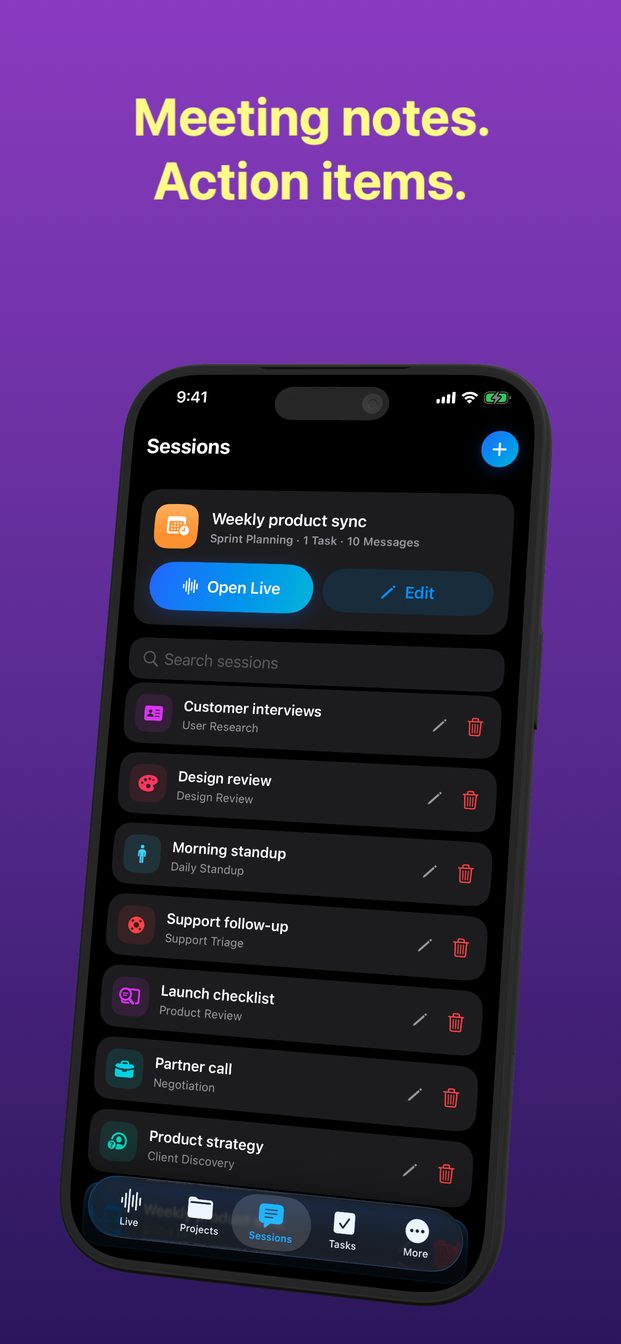
GPT Realtime Assistant can organize sessions and projects, but that does not mean a recipient automatically receives the content or sees the same workspace. Keep the handoff in a format you can actually share using your available tools. Do not assume cloud collaboration or external task integration.
Test whether the record is sufficient
Read the handoff as if the conversation had disappeared. Can you identify the next check, the expected result and the fallback if it fails? If not, add those details. A short unresolved-question list is more useful than several paragraphs of conversational background.
When evidence cannot be shared, name the restriction and describe what can be verified without it. When work has stopped, preserve the last known state rather than filling gaps. A handoff succeeds when it supports an honest next step, even if that step is asking for a missing fact.
FAQ
Should I include the full transcript?
Usually include only the relevant context and keep a transcript separately when appropriate. The handoff should make the next action clear.
How do I avoid invented completion claims?
Require separate sections for observations, verified results and open questions, then check each completed item against its evidence.