Build a decision log from meeting notes
A decision log should explain what changed and why, not reproduce the whole meeting. Its most important boundary is between an option someone mentioned and a choice the people responsible actually accepted.
Give every entry a decision-shaped question
“Discussed onboarding” is a topic, not a decision. “Will the pilot require a live orientation?” is a question with alternatives and consequences. Start there. A useful entry can then explain which alternative was chosen, who accepted it, which condition applies and what would trigger reconsideration.
Do not make a decision out of silence. A participant failing to object while checking another document is not strong evidence of approval. If the meeting never reached a clear conclusion, record the item as open and state what information or authority is missing.
Use a compact record with separate fields
An original example for a small pilot might read: “Question: live orientation or written instructions? Decision: written instructions for the internal pilot only. Reason: five participants can test the existing guide this week. Owner: Dana. Dependency: accessibility review before external use. Revisit: after pilot feedback.” These are invented facts showing the format, not a product recommendation.
Notice the limits embedded in the entry. Removing “internal” or the accessibility dependency would change the decision. Adding a field for the source meeting and review status helps someone later distinguish the accepted record from your first interpretation.
Extract candidates before asking for polish
If you are using a live assistant, tell participants before capturing their speech. Afterward, review the relevant notes and ask: “Identify possible decisions in these notes. For each, quote or identify the supporting passage, list conditions and say whether approval is explicit. Do not fill missing owners.” You are requesting a candidate list for human review.
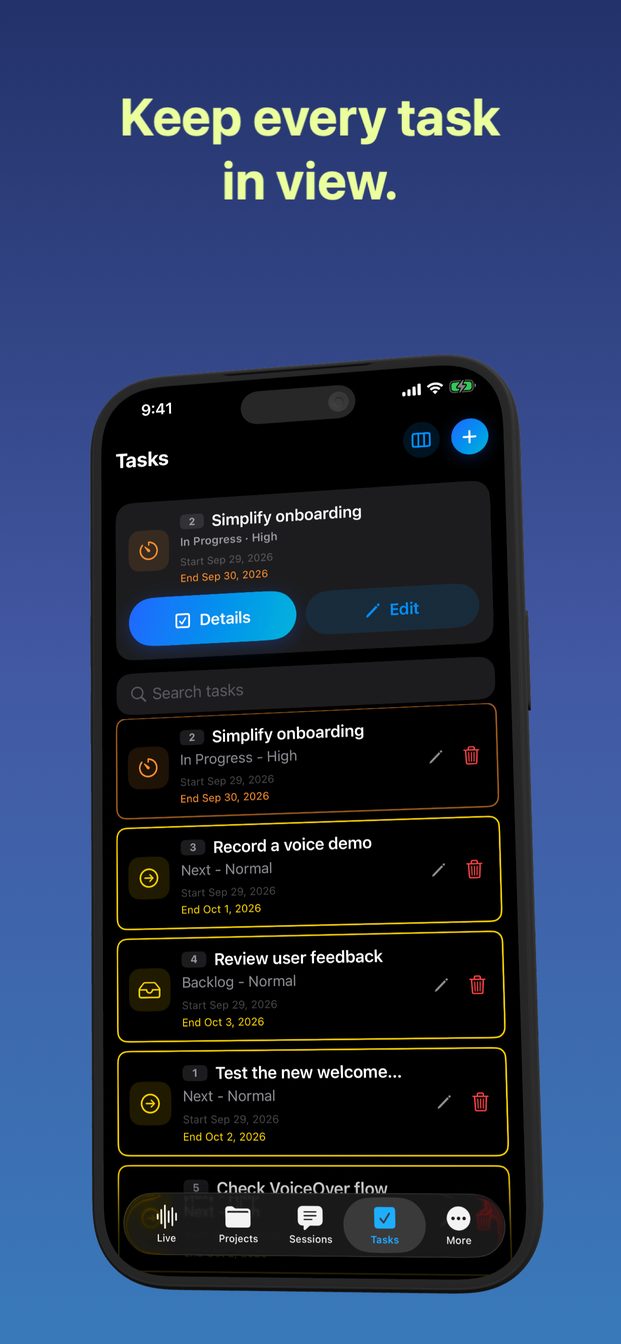
GPT Realtime Assistant has sessions and tasks, but this article does not claim a dedicated decision-log module or automatic approvals. Maintain the accepted log in a document your team already uses. An AI answer in a session is not the authority that makes the choice binding.
Resolve the ambiguous entries
The implementation action may be complete while the decision remains current for months. Keeping them separate avoids the common mistake of deleting the rationale when a task is checked off.
- Separate decisions, proposals and unresolved questions into three groups.
- Read the source around every apparent acceptance, including the preceding objection.
- Ask the accountable person to clarify entries with uncertain status.
- Add the reason and rejected alternative only when the discussion supports them.
- Record the action needed to implement the decision separately from the decision itself.
- Date the reviewed version and tell affected people where to find it.
Handle changed decisions as history
Suppose the pilot reveals that written instructions are insufficient. Create a new entry that supersedes the earlier choice and links its reason to the observed feedback. Do not overwrite the first entry so completely that the original constraint disappears. Someone reviewing the project needs to understand why a sensible earlier choice changed.
Before sharing, remove conversational details that do not contribute to the rationale. A decision log benefits from traceability, but it need not expose every person's tentative remark. Its final test is practical: can a colleague understand what to do, which limit still applies and whom to ask when circumstances change?