Prioritize a messy task list through spoken questions
An AI task ranking is useful only when you can explain why one item comes before another. Give the assistant your real constraints and make it ask about missing facts before it produces an ordered list.
Clean up the inputs first
Split compound items and distinguish tasks from goals. “Prepare workshop” is a goal-sized bundle; “ask organizer to confirm room capacity” is an action. Remove duplicates and mark optional ideas separately. Otherwise an assistant may rank the same work twice or put an attractive idea ahead of a real commitment.
For each remaining task, note a due date if agreed, the consequence of delay, who or what it unblocks, an effort estimate if you have one, and whether the next step is under your control. Unknown values should stay unknown. Do not let a generated estimate silently become your plan.
Ask questions before ranking
Original prompt: “Help prioritize these tasks for the next working session. First ask at most three questions whose answers could change the order. Use deadlines, dependencies, impact and realistic available time. State assumptions. Return a proposed order with one reason per item and a separate waiting list. Do not invent urgency or owners.”
Answer with concrete constraints: you have ninety minutes, room confirmation is needed before choosing exercises, and the handout draft is due next week. The assistant can then recommend requesting the missing room information before polishing an optional cover page. A plausible order should show the dependency, not just label one task “high priority.”
Compare a small worked list
Fictional list: request room capacity, draft exercise instructions, choose a cover color, send the approved invoice. If the invoice has an agreed deadline today, it may take precedence. If capacity is needed by another person tomorrow, a short request now can unblock later work. Color choice remains optional unless a real dependency says otherwise.
Now change one fact: the room was already confirmed. A sensible ranking should update. If the assistant repeats the same order after the important constraint disappears, ask it to explain the dependency again. This is a useful review of its reasoning without treating its output as a mathematical optimum.
Choose a first action and review later
Accept an order yourself and select one action you can actually start. Keep a waiting list for tasks dependent on another person. Agree when you will reconsider the order, such as after the venue reply or after finishing the due item, instead of re-ranking every time you feel uncertain.
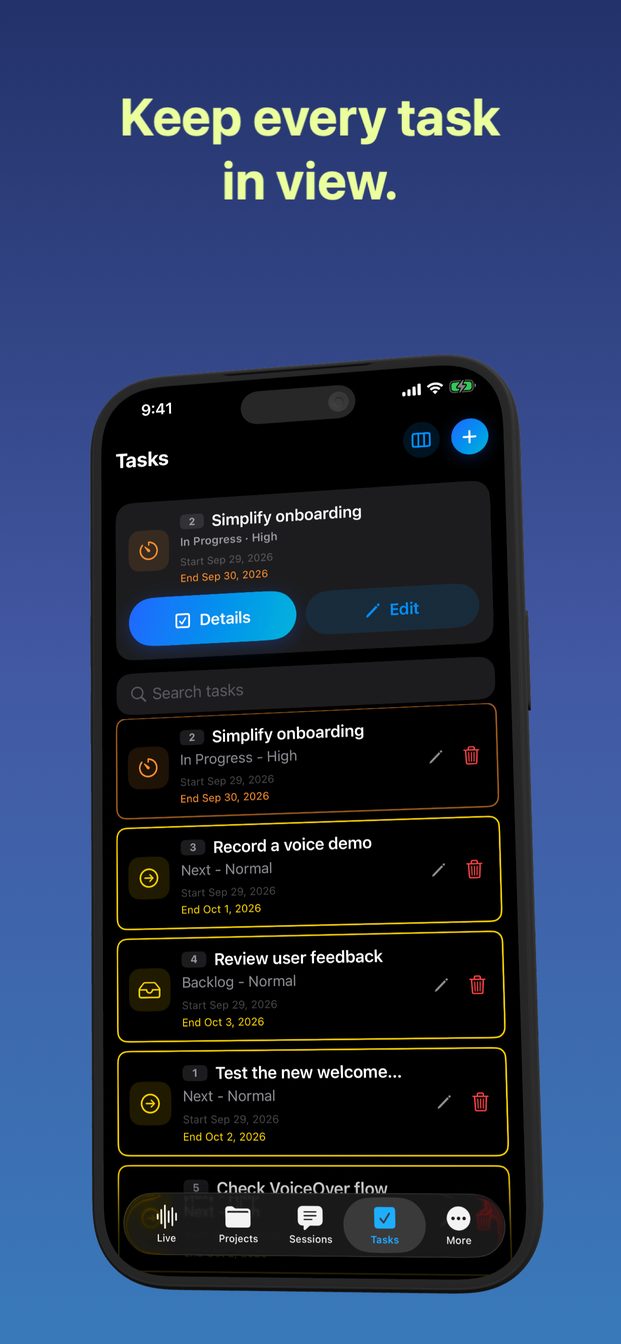
You can discuss priorities in GPT Realtime Assistant and manually update your task statuses or priorities afterward. This does not imply automatic scheduling, calendar optimization or assignment to colleagues. Preserve genuine deadlines and approvals in the relevant system, and ask the responsible person when two commitments conflict rather than letting AI silently choose which promise to break.
FAQ
Should I use a numerical priority score?
Only if the inputs and weighting mean something in your work. A short explanation of dependencies and consequences is often easier to audit than an invented score.
What if two deadlines conflict?
Identify the conflict and ask the responsible people to resolve scope or timing. A generated ranking does not authorize missing a commitment.