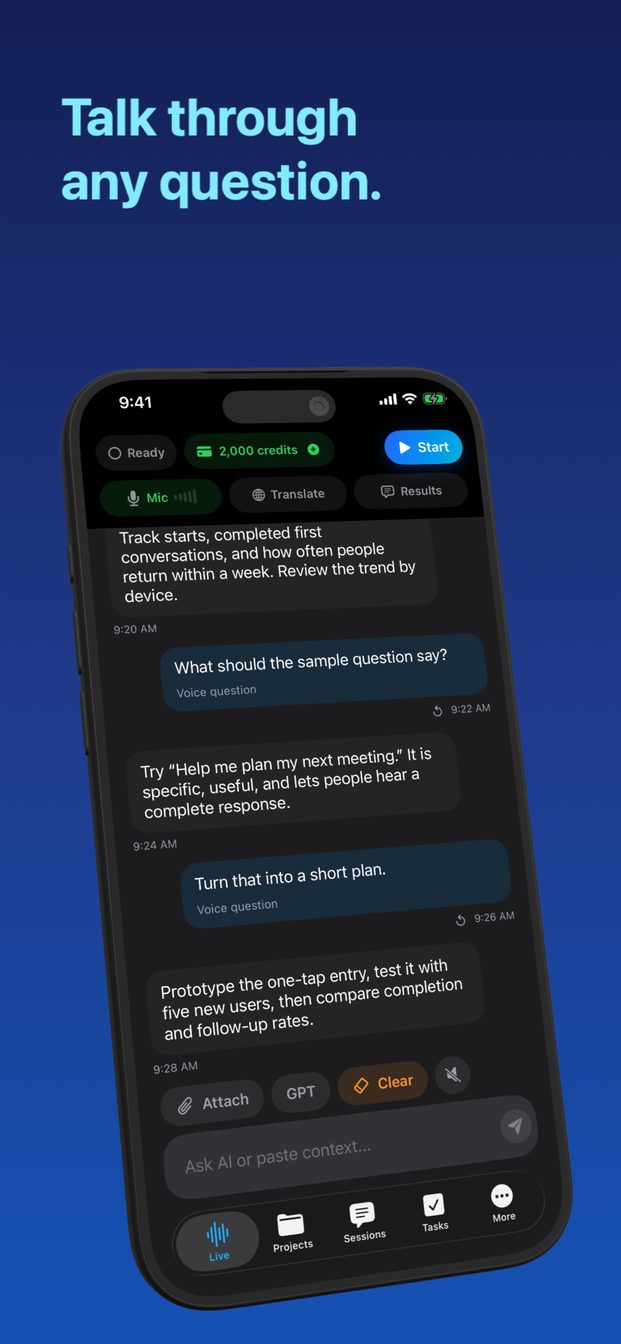
Get language corrections without interrupting every sentence
Correcting every sentence can make a language-practice conversation impossible to sustain. Choose when feedback arrives and what kind of feedback you need, then check whether the correction reflects your intended meaning.
Choose a feedback rhythm
For fluency practice, try a short conversation followed by feedback on two recurring patterns. For a specific grammar exercise, a correction after each answer may be appropriate. Neither rhythm is best for every task. Agree the purpose with your practice partner before asking for more feedback.
Tell the assistant your approximate level, the topic and whether you want explanations in the target language or another language you understand. A beginner discussing travel arrangements needs different corrections from an advanced speaker practicing a technical explanation. Avoid giving a detailed personal profile when a simple practice context is enough.
Distinguish grammar from recognition
If the transcript shows “I go yesterday,” you may have used the wrong tense, or the recognizer may have missed the ending you actually said. Do not treat every written error as a proven spoken error. Repeat a doubtful sentence or type the wording you intended before asking for an explanation.
This is especially important for names and accented speech. A system that mishears a word cannot reliably judge the pronunciation from the mistaken text alone. GPT Realtime Assistant's readback and voice features are not being presented as standardized pronunciation scoring or a certified assessment of fluency.
Give the assistant a narrow correction task
Try: “Have a short conversation with me about planning a weekend trip. Let me finish each thought. After three exchanges, give at most two grammar corrections and one phrase that was already effective. Preserve my meaning. If the transcript is ambiguous, ask what I intended rather than correcting a guess.”
For an invented answer, “Yesterday I go to the station,” a focused correction is “Yesterday I went to the station,” with a brief explanation of the past-tense verb. An unhelpful correction turns the sentence into an elaborate travel diary or changes station to airport. Better grammar should not introduce new facts.
Review the feedback in a second round
An assistant's reformulation may be a stylistic alternative rather than a correction. Ask it to distinguish grammar errors, unnatural but understandable phrasing and optional style changes. That prevents you from learning that every difference from the model's preferred wording is wrong.
- Check that the quoted original matches what you meant to say.
- Ask for one short explanation of the corrected form.
- Create a fresh sentence using the same pattern.
- Request a follow-up question that gives you another chance to use it.
- Keep a small personal list of recurring issues in your own notes.
- Return to conversation rather than remaining in correction mode indefinitely.
Test whether the pattern transfers
A memorized correction is only the first step. Use the same tense or construction in a different situation without looking at the example. If you hesitate, return to a simpler sentence and build from there. Human teachers or reliable reference material can help resolve corrections that seem inconsistent.
The published GPT Realtime Assistant supports spoken interaction, language practice and readback; feedback timing here comes from your instructions, not a guaranteed learning curriculum. Use the exercise to become more aware of a small number of patterns while keeping the conversation meaningful and enjoyable.