Keep useful one-on-one notes with clear follow-ups
One-on-one notes need enough detail to support the next conversation without becoming a permanent collection of every tentative remark. Record the agreements and the context that makes them understandable, and be careful about who can see the result.
Agree on the purpose before capturing the conversation
A development conversation, workload check-in and performance review need different records. Ask what both people want the notes to support. A simple agreement might be to keep shared actions and discussion topics, while leaving personal details out of the shared recap. Follow your organization's policy for sensitive employee information.
If you want to use a listening assistant, explain that first and get any required permission. Offer an ordinary note-taking alternative. A one-on-one can contain information the other person did not expect to be processed by a cloud service; a useful assistant is not a reason to ignore that expectation.
Separate observation from interpretation
“Two reviews were returned after the agreed date” is an observable claim you can check. “You do not care about deadlines” is an interpretation of motive. In your notes, keep the evidence, the person's explanation and the impact distinct. Otherwise a summary may harden a tentative judgment into something that sounds like a finding.
For an invented workload conversation, the employee says they have three simultaneous review assignments and cannot tell which is most urgent. The manager agrees to set an order by Wednesday. The note should describe the prioritization problem and the manager's action, rather than asserting that the employee has a time-management problem.
Ask for a restrained working recap
A suitable prompt is: “Turn these authorized notes into a shared recap with Topics, Agreements and Next check-in. Use neutral observable wording. Do not infer emotions, health conditions, intent or performance ratings. Mark any deadline that was not confirmed. Exclude the private background details listed separately.” Review the exclusions yourself rather than assuming the instruction caught everything.
An illustrative result is: “We discussed competing review requests. Morgan will confirm their order by Wednesday. At the next check-in we will review whether that order made the workload manageable.” That records a follow-up without converting the conversation into an unsupported diagnosis.
Review together where possible
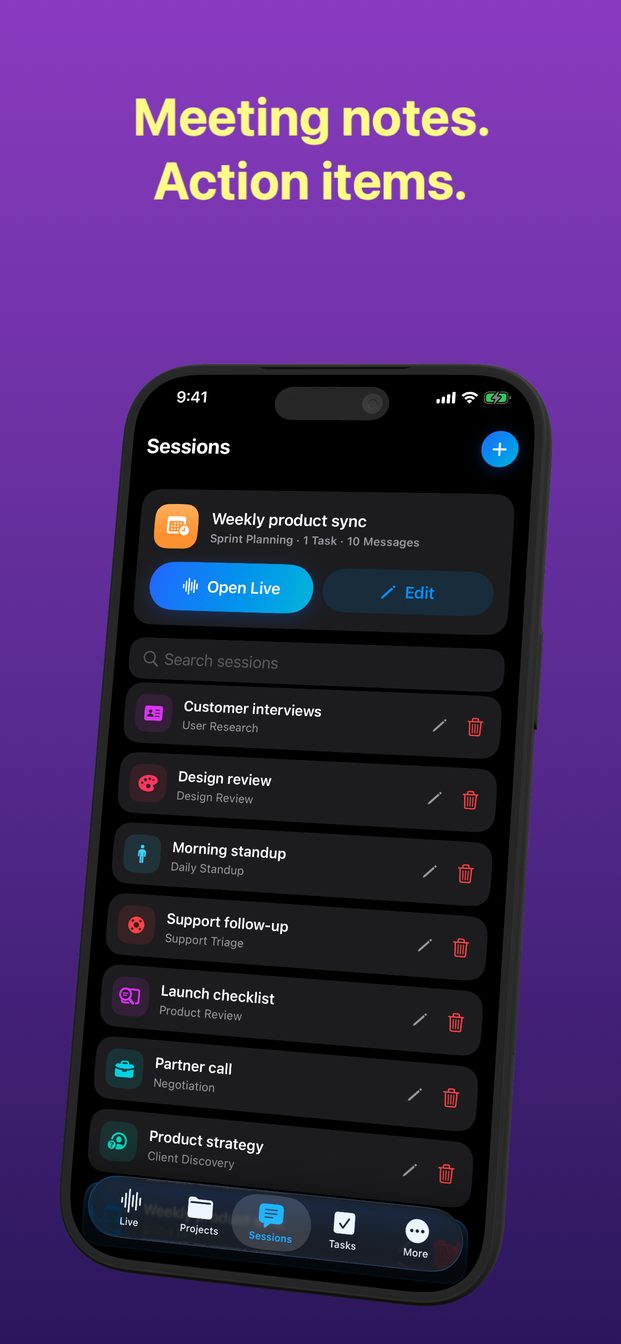
GPT Realtime Assistant can keep sessions and tasks, but that does not establish a shared employee workspace or automatic access controls for your team. Use the approved record system for material that requires organizational retention, permissions or formal review.
- Confirm that both people recognize the topic and agreed action.
- Ask whether a quoted phrase needs context to be fair.
- Check the owner and date of each follow-up.
- Remove personal details that are unnecessary for the agreed purpose.
- Decide where the accepted note belongs and who should have access.
- Revisit the action at the next meeting, updating its status explicitly.
Keep disagreement visible without inflaming it
If you disagree about the explanation, record the difference accurately: “We agree the review was late; we have different views about whether the brief was complete.” Do not ask an AI model to decide who is trustworthy from a transcript. A text record cannot establish everything about tone, context or intent.
The strongest one-on-one note creates a better next conversation. It lets both people check a real commitment and correct a misunderstanding, rather than forcing them to defend an automated characterization of what they supposedly meant.