What AI pronunciation feedback can and cannot establish
When an assistant writes the word you intended, that shows a recognition outcome, not a complete pronunciation assessment. Use AI feedback to form a practice question, then check it against audio examples and appropriate human feedback.
Separate three different observations
A transcript tells you what the recognizer produced. A conversational reply tells you how the assistant interpreted the exchange. A pronunciation assessment would need evidence about speech sounds, rhythm or intelligibility against an appropriate method. These observations can disagree, and none should be silently substituted for the others.
For instance, a system may infer a word from context even when a sound was unclear. Conversely, a proper name may be transcribed incorrectly despite clear speech. Do not label either result “bad pronunciation” without checking the recording conditions, the intended word and the surrounding sentence.
Run a meaning-based contrast exercise
Original prompt: “I want to practice making two everyday words distinguishable in a sentence. Give me a short example for each word and explain the difference in plain language. When I reply, show what you understood. Do not give a numerical pronunciation score or claim to measure individual sounds unless you actually have that capability.”
Choose a contrast from a trusted learning resource rather than asking the assistant to invent a difficult minimal pair in an unfamiliar language. Listen to reliable audio examples. Then use each word in a sentence with enough meaning to make the intended choice clear. You are investigating an issue, not producing a pass/fail certificate.
Test the microphone before your accent
Use a quiet space, avoid covering the microphone and speak at a comfortable volume. If output is coming from the speaker, stop any feedback loop before continuing. A transcript filled with the assistant’s own words is an audio-routing problem. Increasing your effort to pronounce perfectly will not repair that.
Compare a short ordinary sentence with the difficult phrase. If both are missing or badly garbled, resolve capture or connection problems first. If the ordinary sentence is reliable but the contrast is repeatedly unclear, note the exact example to discuss with a teacher or language partner. Avoid diagnosing a speech disorder from these observations.
Use feedback without overclaiming it
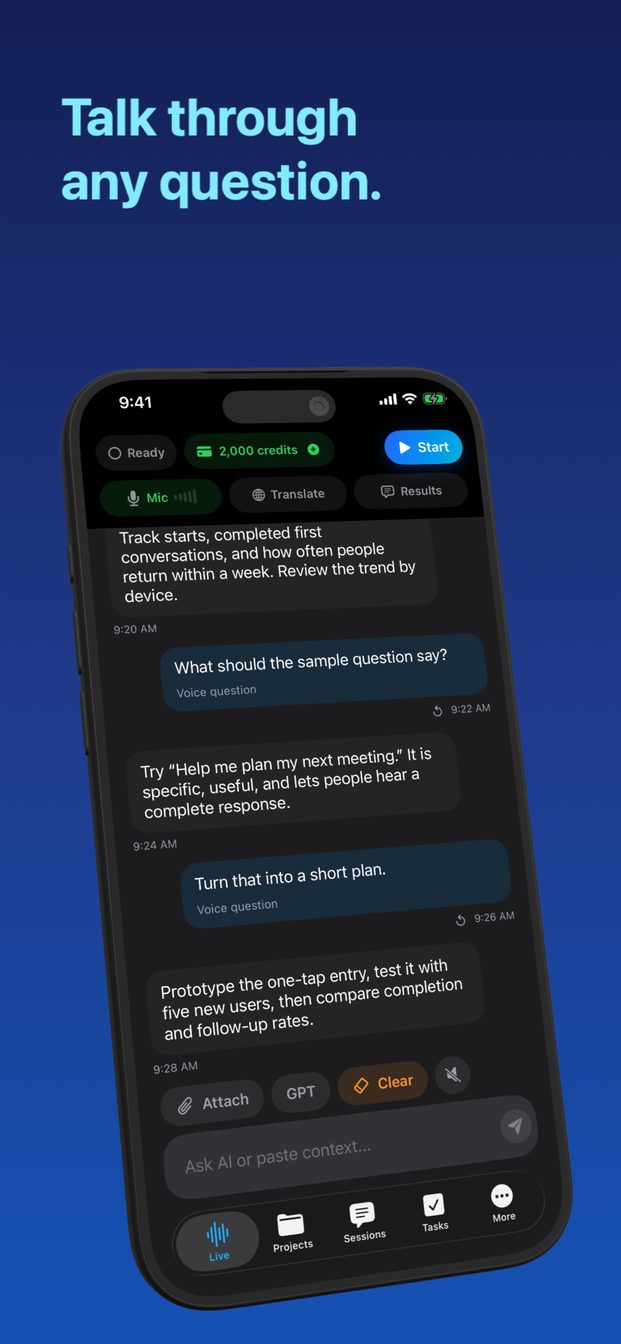
GPT Realtime Assistant’s karaoke readback highlights words during practice. That can help you follow a text, but highlighting is not a phonetic grade. Likewise, asking an assistant to repeat a phrase provides a model to inspect, not proof that its accent or pronunciation is the only acceptable one.
Keep a short record: intended phrase, recognized text, listening conditions and the question you want answered. A qualified teacher can then give targeted feedback about intelligibility or a sound distinction. Respect regional variation, and judge improvement by whether listeners understand your intended meaning in relevant situations rather than by eliminating every trace of your accent.
FAQ
Does a perfect transcript mean perfect pronunciation?
No. Recognition may use context, and it is not a complete measure of how other listeners will understand you.
Can karaoke word highlighting grade my accent?
No. Word-following feedback and a validated pronunciation assessment are different functions. Use highlighting for rehearsal, not a certified score.