Turn a grammar rule into a spoken practice exercise
A grammar explanation becomes useful when you can use the distinction in a sentence you have not rehearsed. Pick one contrast, make the situation concrete, and ask for a short exercise that reveals what you understand.
Choose a contrast, not an entire tense system
“Teach me English grammar” gives an assistant almost no boundary. “Help me distinguish a finished visit yesterday from a life experience without a stated time” gives it a manageable task. Write two sample meanings in your own language before looking at the target-language forms.
Use a rule from your course or a trusted reference as the starting point. An AI explanation can be incomplete or use examples that do not fit the rule. If the lesson includes exceptions, set them aside for the first round and return to them explicitly rather than treating a simplified rule as universal.
Ask for meaning before terminology
Original prompt: “Practice one English contrast with me: ‘I visited the museum yesterday’ and ‘I have visited the museum.’ Explain the difference in two plain sentences. Give me a situation and ask which sentence fits. Wait for my answer. If I get it wrong, explain the time clue, then give a different situation. Do not introduce other tense contrasts until I ask.”
Read the examples aloud, then explain their difference in your own words. You do not need an elaborate grammatical label to show that you noticed a finished time reference. Ask the assistant to quote the clue in the exercise so the correction is attached to evidence rather than a generic “try again.”
Move from choosing to producing
First choose between two supplied sentences. Next complete a missing verb in a short statement. Finally make your own sentence about a fictional weekend or experience. This progression changes the demand: recognizing an answer is easier than forming one without a model.
For a worked check, use “Last Saturday, I ___ a photography exhibition.” Explain why the stated day matters. Then remove the day and change the communicative purpose: someone asks whether you know a particular museum. Ask which form is natural in that context, while allowing that regional usage and conversational context may affect the choice.
Catch false corrections
An assistant may change your wording for style while presenting the change as a grammar correction. Ask it to distinguish “incorrect for this meaning,” “grammatical but different meaning,” and “optional style change.” If it cannot explain what changed, verify with your course reference or a qualified teacher.
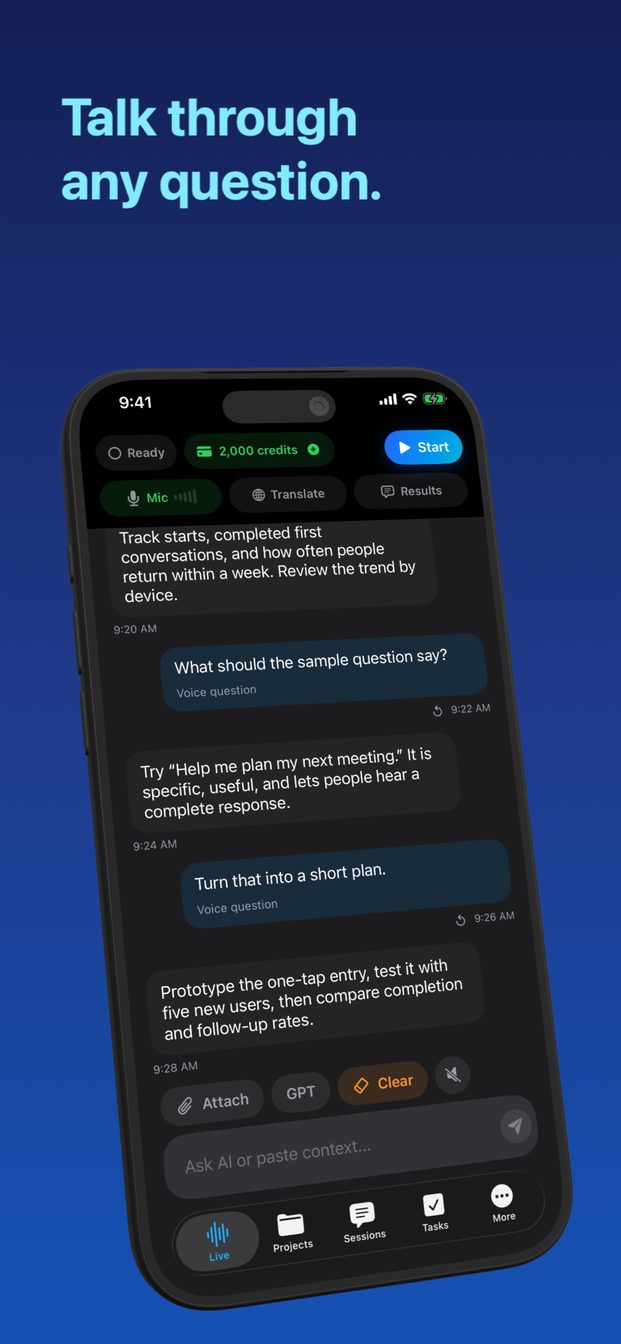
In a general GPT Realtime Assistant session, you can speak the answers and inspect the resulting text. A recognition mistake is separate from a grammar mistake: check the transcript before accepting feedback. Finish with one unseen example, write down the distinction you used, and revisit it in a later conversation rather than extending the drill until every reply becomes familiar.
FAQ
Does a correct transcript prove my grammar was right?
No. Recognition only gives text to inspect. Compare that text with the intended meaning and the rule being practiced.
How many rules should I practice together?
Start with one contrast. Add a second only when you can explain and use the first without copying the supplied example.