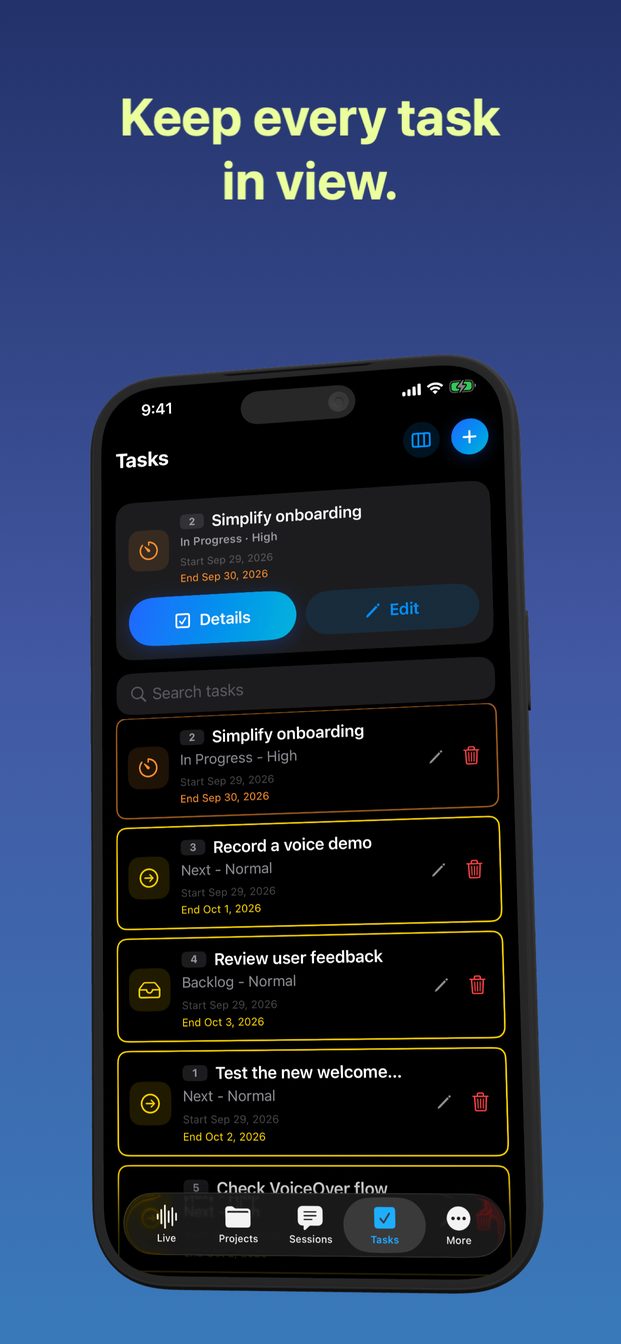
A task template with owner, deadline and completion check
A task is ready to act on when someone can tell what to do, who owns it and what evidence will show it is complete. A deadline alone does not supply the missing definition of done.
Write the deliverable before the date
Start with an action and an object: “Prepare a two-page workshop handout for organizer review.” Avoid activity-only wording such as “work on workshop materials.” It is difficult to finish a task whose end state is not visible, and difficult to prioritize it against other work.
Then identify the scope. A review draft is different from a final printable handout. Include what is excluded when that distinction affects expectations. For example, the first draft may include placeholder diagrams and require no layout polishing. This prevents a reviewer and an owner from silently imagining different deliverables.
Copy the task card
Original template: “Action and deliverable: __. Owner who accepted: __. Due date and time zone: __. Completion evidence: __. Dependencies: __. Reviewer or recipient: __. Source of commitment: __. Unresolved details: __.” A field may remain unknown, but an unknown should remain visible rather than becoming a plausible invented value.
Sample card: “Prepare two-page workshop draft. Owner: Mira, accepted in planning discussion. Due: 28 October 2026, 16:00 Sofia time. Evidence: draft shared with organizer for content review. Dependency: confirmed exercise list. Reviewer: Jo. Unresolved: whether the diagram belongs in the first draft.” These are fictional details illustrating the structure.
Use AI to test completeness
Original prompt: “Review this task card. Identify missing information that could stop the owner starting or the reviewer accepting the result. Do not fill missing fields. Suggest the smallest clarification question for each gap. Distinguish a hard dependency from a preference.” This is more useful than asking the assistant to make the task sound polished.
If the exercise list is missing, the next action may be requesting that list, not producing the handout. If the diagram is optional, it should not necessarily block a first draft. Check the proposed distinction with the project owner because only the people responsible can decide what is mandatory.
Maintain the card as circumstances change
When a date moves, record the new date and the reason. When scope expands, check whether the owner still accepts it. Mark completion only after the agreed evidence exists. “Almost done” and “review requested” can be useful statuses, but neither is the same as “accepted final.”
You can use GPT Realtime Assistant to discuss or draft this wording, then manually record the reviewed task. This does not imply automatic task extraction, external integration or team assignment. Keep actual files and approvals in their appropriate locations and refer to them accurately instead of asking AI to certify work it has not seen.
FAQ
Must every task have a deadline?
Not every task needs an immediate due date, but distinguish an unscheduled task from a commitment with a missing date. Make that choice explicit.
Who should AI choose as owner?
It should not invent one. Use the person who accepted the task or leave ownership unresolved until confirmed.