Turn meeting notes into a project brief
Meeting notes record discussion; a project brief tells someone what is being attempted and under which constraints. Converting between them requires deciding what was actually agreed, not simply making the notes shorter.
Prepare evidence before prose
Use notes you are entitled to share and label the source meeting and date. Mark decisions, suggestions and questions in the original. If the notes came from an audio session, check uncertain transcription first and obtain any required participant permission. A well-written brief cannot repair a misheard commitment.
Collect the goal, deliverable, boundaries, owner, timing and constraints that the notes actually support. If one is missing, leave a gap. Do not infer the project sponsor from whoever spoke most or treat the earliest mentioned date as an approved deadline.
Give the assistant a brief structure
Original prompt: “Draft a project brief from these reviewed notes only. Use sections for outcome, deliverable, in scope, out of scope, confirmed decisions, dependencies, proposed next actions and unresolved questions. Attach the source note or quotation to every date, owner and constraint. Mark anything not agreed as a proposal. Do not invent a business case.”
The structure forces a useful distinction: a team may agree to test an idea without agreeing to launch it. A brief that turns a small trial into a public launch changes the project. Ask for the minimum brief that lets the owner plan the next step, not a generic plan containing every possible department.
Walk through a sample conversion
Fictional notes: “Try a beginner photography workshop for twelve people. Jo will confirm the room. Mira can draft the exercise list after the room is known. We discussed charging a fee but made no decision.” The brief’s outcome is a pilot workshop. Room confirmation is a dependency. Charging a fee remains unresolved.
A bad conversion would announce a paid course, invent a launch date and assign Mira the promotion plan. Check the draft line by line against the notes. Ask which exact passage supports any claim that feels suspiciously complete. The absence of uncertainty is not evidence that the meeting settled everything.
Have someone accept the brief
Send the reviewed brief through your normal review process yourself. Ask the responsible person to confirm the objective, scope and unresolved questions. Update the brief with accepted changes and a date so it does not become a parallel version of the project that no one owns.
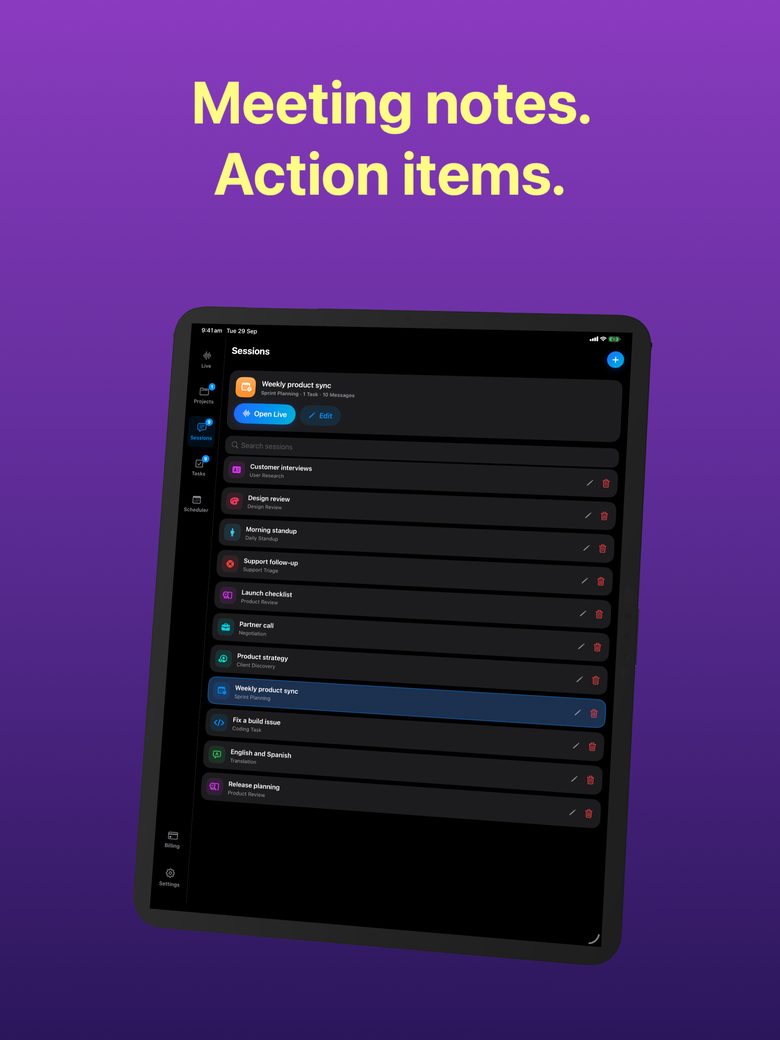
GPT Realtime Assistant can support the discussion and draft text, while projects and sessions help organize the context. This guide does not promise automatic minutes-to-brief conversion, document export or cloud collaboration. Record the final brief manually, keep relevant source references and use its unresolved questions to plan the next conversation rather than letting generated prose hide them.
FAQ
Is a project brief just a meeting summary?
No. A brief defines the intended outcome, boundaries and conditions for work. Notes can contain ideas that never became part of the project.
What if the meeting did not name an owner?
Put ownership in unresolved questions and ask for confirmation. Do not assign it from speaker frequency or a vague expression of interest.