Keep project context useful across AI conversations
Useful project context is a current briefing, not a growing pile of old conversations. Keep the goal, accepted decisions and next unresolved question easy to find, and distinguish them from earlier suggestions.
Create a small source of current truth
Write the project outcome in one sentence, followed by the current deliverable and its boundary. For a fictional community photography workshop: “Prepare the first beginner session for twelve participants; venue booking and promotion are outside this brief.” That stops a helpful assistant from repeatedly reopening work that belongs elsewhere.
Add constraints that affect decisions: available equipment, the confirmed room size, who approves the handout and the delivery date. Include the source or person behind each important constraint. An old chat suggestion is not an approved requirement merely because it has been repeated in later conversations.
Use a context card with evidence labels
Original template: “Goal: __. Current deliverable: __. Confirmed decisions, with dates: __. Constraints, with sources: __. Completed evidence: __. Still unresolved: __. Next question for this session: __. Suggestions not yet accepted: __.” Keep the last two fields separate so the assistant does not promote an idea into the plan.
For example, “Use a two-page handout, confirmed by organizer on 20 October” is a decision. “Maybe include a glossary” remains a suggestion. “Handout drafted” is progress only when a draft exists; a conversation about drafting it does not establish completion. This distinction matters when you ask for a status update later.
Start each conversation with a bounded task
Original prompt: “Use this current context card for the workshop. Today, help decide which three camera settings belong in the beginner handout. Do not reopen the confirmed venue or invent equipment we have not listed. Give a recommendation, its reason and any missing information. Keep proposed changes separate from accepted decisions.”
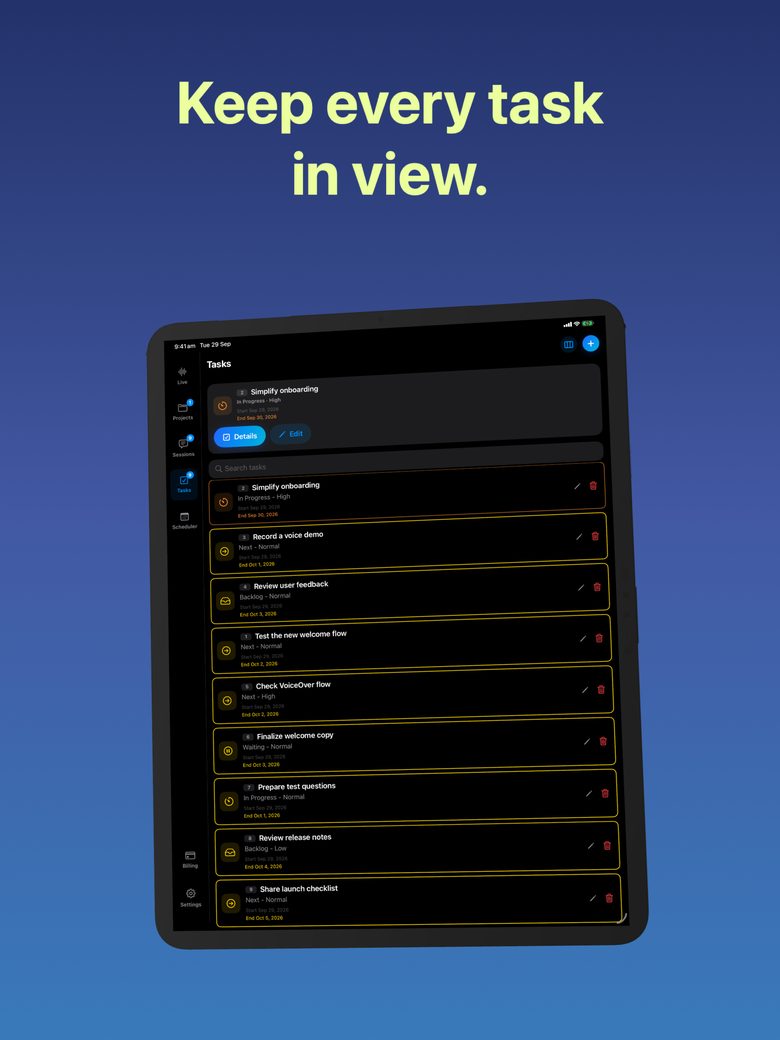
GPT Realtime Assistant can organize sessions in projects. Use that structure to group related work, but still review which context you have actually supplied for the present discussion. Do not assume that selecting a project guarantees the model has read every old session, or that context is shared with a team or synchronized to another service.
Update the card after the decision
At the end, ask for proposed changes to the context card rather than a full rewrite. Compare them with the conversation and accept only confirmed decisions. Record the decision date and the reason when a constraint changes. This preserves enough history to explain why last week’s recommendation differs from this week’s.
Archive superseded suggestions outside the current brief instead of leaving contradictory statements in the main card. Keep sensitive material out of prompts when it is not needed. The result is a manually maintained briefing that you can reuse across conversations, not an automatic memory guarantee or a substitute for the project’s actual source files and approvals.
FAQ
Should I paste every previous chat?
Usually a reviewed context card is easier to audit. Add the particular source excerpt when the next question depends on its exact wording.
Does a project mean everything is automatically remembered?
Do not assume that. Check what the session has access to, supply the current brief explicitly and verify proposed changes yourself.