Check names, addresses and numbers in a translation
A translation can sound natural while carrying the wrong room number or date. Treat names and numbers as fields to confirm explicitly, rather than details that fluent wording automatically makes reliable.
Mark fields that must not drift
Before translating, identify exact details: person or place names, reference codes, quantities, prices, units, times and dates. Preserve the original spelling beside the translated sentence. If a name has a conventional local form, keep enough original text for the other person to recognize or search for it.
Do not assume a spoken number contains its unit. “Twenty” might mean minutes, euros or items. Ask for the missing unit before translating it into a more specific statement. Filling an information gap with a plausible guess is especially hard to notice when the output sounds confident.
Use a field-by-field prompt
Original prompt: “Translate this message into English. Keep names, reference codes and quantities unchanged. After the translation, list the date, time, place, amount and unit exactly as supplied. Mark any missing or ambiguous field as unclear; do not infer it. Source: The sample booking is for 04/05 at 8, room B-17, for 2 people.”
The correct review should notice that the date convention and the time of day are unresolved. It should not silently decide that 04/05 means April 5 or May 4. The point of the example is the ambiguity, not finding a confident-looking final sentence. All booking details here are fictional.
Confirm using a different representation
Rewrite a confirmed date with the month spelled out and include the year when it matters. For time, add a time zone for remote arrangements and clarify morning or evening. For prices, state currency and whether the amount is per item, per person or total. For addresses, keep the original written address available.
A worked read-back might be: “To confirm, 5 April 2027 at 08:00 local time, room B-17, two people. Is that correct?” Only produce this after the missing information has been supplied. Have the person check the written version; hearing a second spoken translation can repeat the same misheard digits.
Trace errors to their stage
First compare what was said with the source transcript. Next compare the transcript’s fields with the translation. Finally compare the translation with the written confirmation. If the room was captured as D-17, changing the translation tone will not fix the source. Correct the source explicitly and request a new translation.
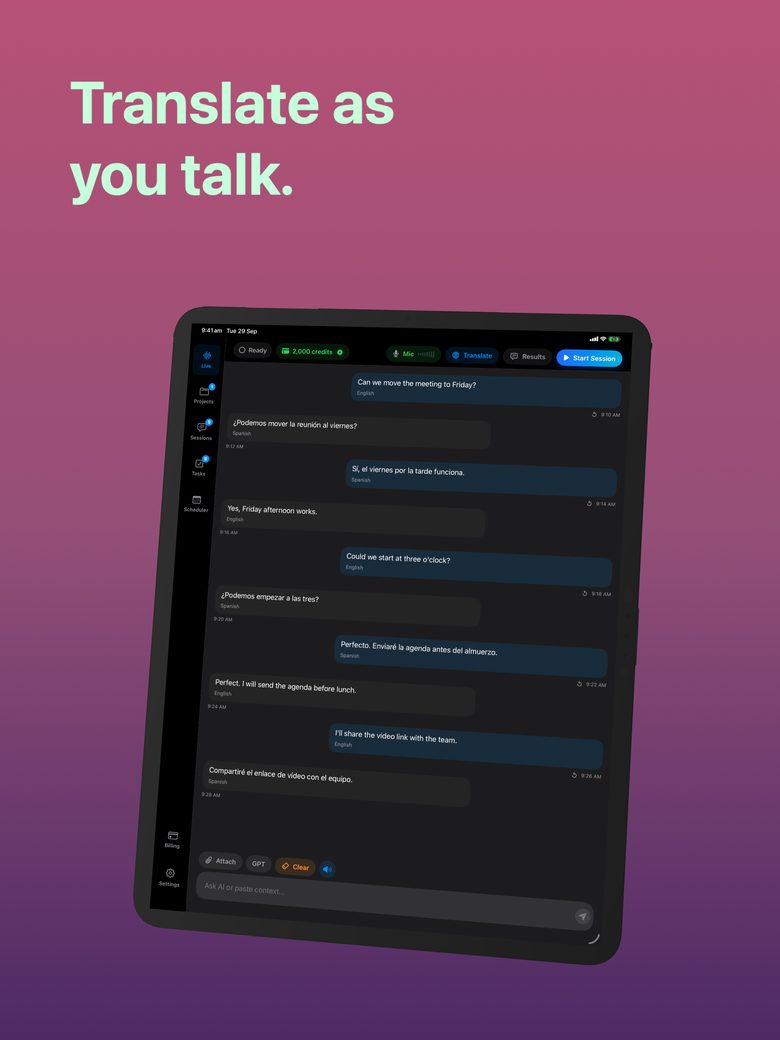
In GPT Realtime Assistant, inspect the text rather than relying solely on spoken output. You can use a separate note for the confirmed fields; this is a manual verification routine, not an automatic validation feature. For official records, transactions or other consequential uses, obtain the required confirmation through the responsible organization rather than treating an AI read-back as authorization.
FAQ
Should names be translated?
Often the original spelling is essential. If a conventional local form is helpful, retain the original alongside it and confirm with the person involved.
What is the fastest check for a date?
Ask for the month in words and confirm the year. For arrangements across time zones, also state which local time is intended.