Keep bilingual meeting notes without losing the original
Bilingual meeting notes should let someone trace a translated point back to what was actually said. Keep the original excerpt, its translation and your interpretation in separate fields instead of blending them into one polished paragraph.
Agree what the notes are for
Decide whether you need a personal understanding aid, a shared action list or a reviewed meeting record. These have different review requirements. Ask participants before using an audio session and follow the applicable workplace and recording rules. A translation tool does not supply permission to record other people.
Choose one reference language for each source excerpt and label the target language. If several people switch languages, keep the language attached to the relevant passage rather than assuming the entire meeting shares one source language. Preserve technical names exactly when participants use them as identifiers.
Use paired rows with evidence
Original note template: “Item ID: __. Original excerpt: __. Source language: __. Translation: __. What remains uncertain: __. Proposed action: __. Confirmed by: __.” A row can contain a short excerpt you manually selected; it does not need the entire meeting transcript.
For a fictional discussion, the source might mean “We can probably send a draft after the design review.” The translation should retain “probably” and the review dependency. A proposed action such as “Send final artwork tomorrow” would add certainty, change the deliverable and invent a date. Mark it as unsupported rather than presenting it as a decision.
Ask AI for a reviewable draft
Original prompt: “Using only these labeled excerpts, draft parallel source/English notes. Keep the source unchanged. Separate decisions, suggestions and open questions. Put unclear owners or dates in an unresolved field. Quote the excerpt that supports each proposed action. Do not turn a translated suggestion into an agreed commitment.”
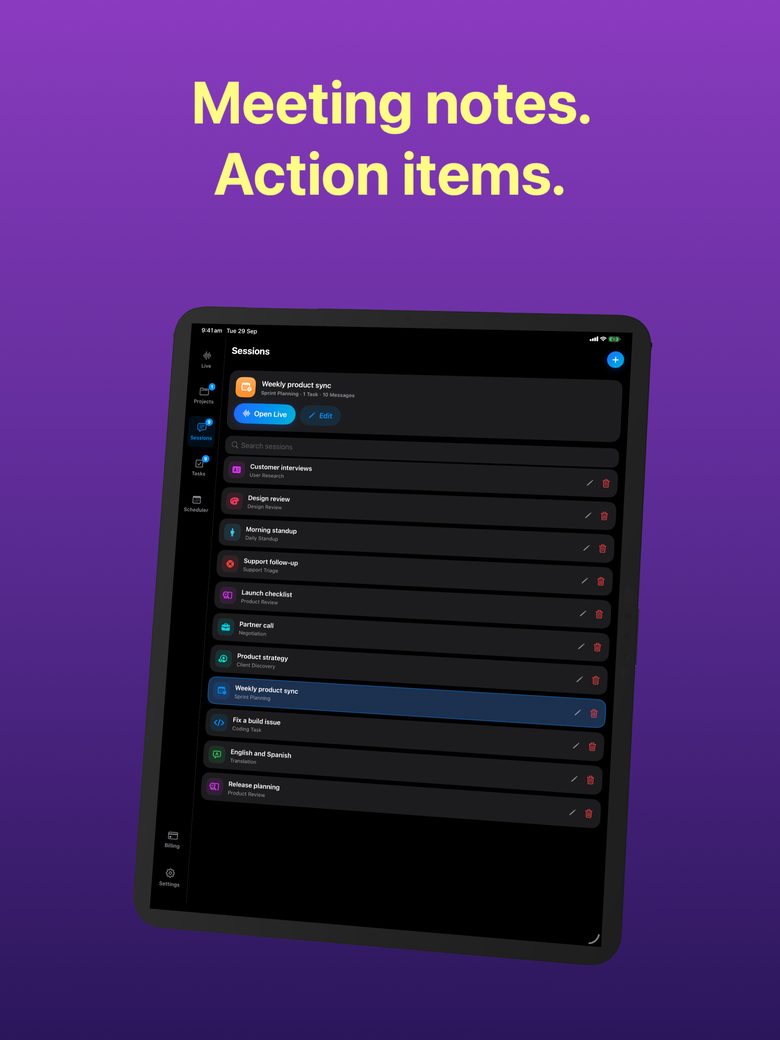
GPT Realtime Assistant can provide the session context for your review. Explicitly ask for the draft and then inspect it; this is not a promise that the app automatically creates official bilingual minutes or exports a two-column document. Record accepted actions manually in your chosen project or task workflow.
Resolve the gaps with people
Read back each important owner, date and deliverable to the relevant participant in a language they understand. Ask whether they accepted the action, not merely whether the translated sentence sounds natural. Store the confirmed wording beside the draft so later readers can see which version was approved.
If two translations disagree, keep the original and the unresolved point rather than choosing the smoother version. For a formal record, follow your organization’s review process and use a qualified translator when needed. Preserve only the information necessary for the purpose, and do not claim that local session storage alone establishes every provider’s retention or confidentiality rules.
FAQ
Can I replace the original with a polished translation?
Keep the original for traceability when you are allowed to retain it. A polished paragraph can hide uncertainty or the difference between a suggestion and a decision.
Does this create official minutes automatically?
No. It is a prompt-and-review method. Participants or the responsible reviewer must confirm decisions and actions.