Rehearse a salary conversation with realistic counteroffers
A salary roleplay is practice for explaining your request and listening to a response. It cannot establish the market value of your role or predict an employer’s budget. Bring verified facts to the exercise and keep hypothetical numbers visibly hypothetical.
Prepare facts before practicing persuasive wording
Write the role, responsibilities, offer terms you actually know and the questions you still need answered. Distinguish base salary from bonus, benefits, hours and review dates. A conversation can go wrong if both people use the same total to mean different things. You do not need to share sensitive personal details with an assistant to rehearse the structure.
Use market information only if you have checked a credible current source for the relevant role and location. An AI-generated salary range is not a verified benchmark. This guide is a communication exercise, not individualized financial, employment or legal advice.
Set the roleplay's boundaries
Try: “Roleplay a recruiter discussing a hypothetical offer of 60,000 units of annual base pay. I want to ask about 65,000. These are invented practice figures, not market data. Respond with a realistic question or counteroffer, one turn at a time. Do not invent another employer's offer or guarantee what the company can approve.”
The deliberately generic currency keeps the example about communication. Replace it with your actual verified terms when preparing privately, and keep your acceptable outcome and walk-away boundary in your own notes. Do not let the assistant decide those for you.
Practice a request and two responses
An illustrative opening is: “I am excited about the role. Given the responsibility for the new handoff process, could we discuss a base salary of 65,000?” A recruiter might say the base is fixed or ask why that figure is appropriate. Your answer should use your actual evidence rather than a claim the assistant invented about market scarcity.
For a fixed-base response, practice: “Thanks for clarifying. Which parts of the package or review timing are open to discussion?” That asks for information without pretending other terms are equivalent. A later review date is a possibility to evaluate, not guaranteed future compensation.
Review the rehearsal in four passes
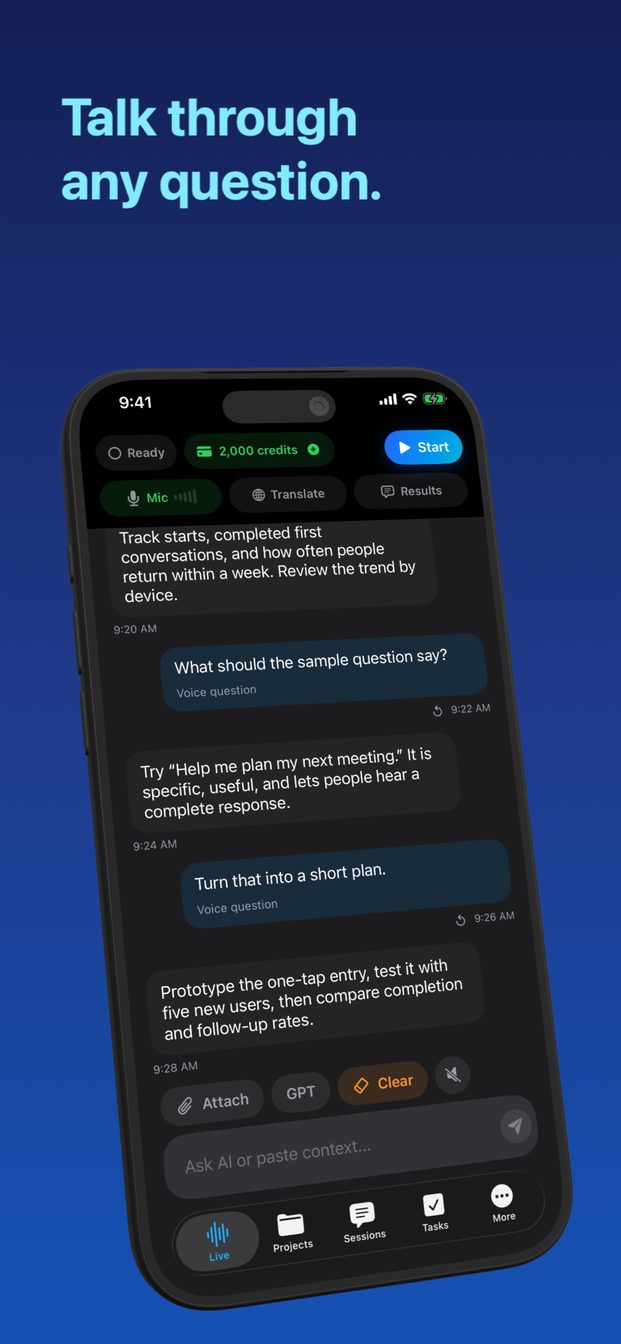
GPT Realtime Assistant's negotiation template and spoken interaction can support a practice exchange. It is not a salary-data service, a representative negotiating on your behalf or a tool that verifies an employer's promises. The conversation you rehearse still needs your judgment.
- Check that every stated fact is true and every practice figure is labeled hypothetical.
- Listen for a clear request rather than a long apology or unsupported ultimatum.
- Ask one clarifying question about the counteroffer.
- Summarize what remains unconfirmed and needs written terms.
Keep the real conversation anchored
If asked for a number you have not decided, practice asking for time to review rather than inventing certainty. If the other person describes a benefit vaguely, ask what the actual terms are. Do not claim a competing offer unless it exists and you are willing to discuss it honestly.
After the real conversation, compare the written offer with what you understood. Rehearsal should improve your ability to ask, clarify and pause. It should not pressure you into a financial decision because an AI practice partner made a counteroffer sound attractive.